
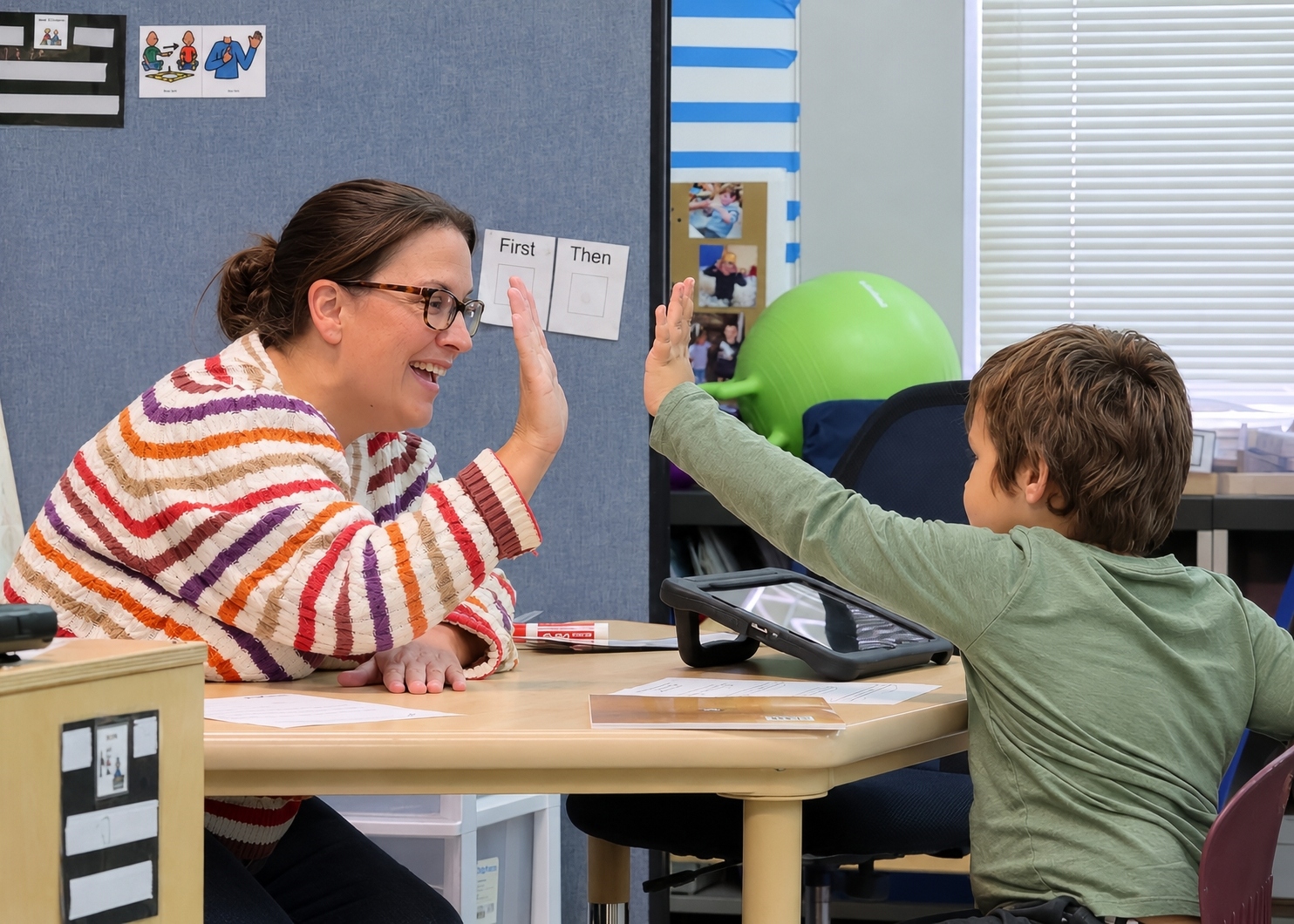
At the center of student success is effective support that looks beyond behavior, recognizes individual needs and uses proactive strategies to identify and address concerns early. At Stillwater Central School District, Safety-Care equips staff with evidence-based strategies to encourage positive actions and reduce challenging behaviors. Rooted in applied behavior analysis (ABA), the model focuses on the whole child and emphasizes prevention.
Pupil Personnel Services Director Mikal Benamati led the district’s transition to Safety-Care last year, replacing its longtime model, Therapeutic Crisis Intervention (TCI). Benamati said the decision reflects a broader shift among schools in how they support students and respond to behavioral challenges.
“A lot of schools are moving toward more evidence-based approaches that align with current best practices,” Benamati said.
Why Safety-Care? “It [Safety-Care] takes into consideration the emotional well-being of a student,” Benamati said.
For years, the traditional approach to challenging classroom behaviors has focused on asking, “How is this student going to change?”
“It’s really the adults who have to be trained to change,” Benamati said. “Safety-Care is for adults. It’s like behavior plans for adults. It shows that we need to replace our responses, replace our tone, replace our words, replace how our classroom looks and staff have to be trained on how to do that.”
Stillwater Elementary i-CAN teacher Priscilla Yakubec has led district training since Safety-Care was adopted, becoming the district’s in-house expert on the program. Last year, Yakubec completed a three-day Safety-Care course through Washington-Saratoga-Warren-Hamilton-Essex (WSWHE) BOCES, taught by board-certified behavior analysts (BCBAs) specializing in the program. Her certification, which must be renewed annually, qualifies Yakubec to train other SCSD staff members.
Yakubec trains staff in cohorts of up to nine, with each group participating in a full day of training. To date, 16 staff members have completed the program in two cohorts.
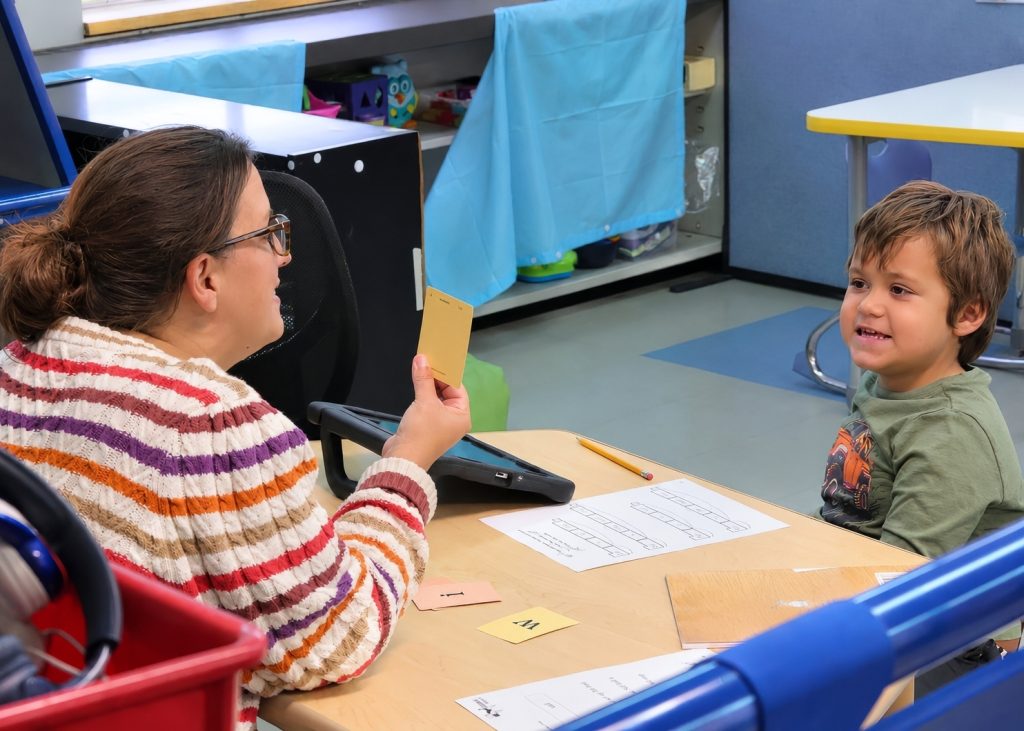
While training can sometimes feel tedious, Yakubec’s Safety-Care sessions are anything but. Participants begin with a lecture and complete exercises in individual workbooks provided as part of the training. Yakubec then shifts to a conversational, interactive workshop, giving participants opportunities to apply what they have learned through role-playing, sharing real-world examples and asking questions. She also draws on her own classroom experiences, offering firsthand insight into situations her colleagues may encounter with their students.
“It’s very engaging. They’re not passive learners,” Benamati said of Yakubec’s Safety-Care training. “They get to ask questions and share.”
Yakubec explains Safety-Care using a staircase analogy. A student’s typical day-to-day behavior represents the baseline at the bottom of the staircase. As the student moves up each step, their level of escalation increases, with the top representing a point at which significant safety concerns arise. The goal is to recognize early signs of escalation and intervene before the student reaches the top.
That starts with knowing the student. By identifying individual triggers and subtle changes in behavior, staff can draw on strategies from their Safety-Care training to help students return to baseline. Because every student has unique needs, finding the most effective approach may take trial and error. Even with her expertise, Yakubec knows that a strategy that works for one student may not work for another.
“We have a lot of students with sensory needs, and the way they’re interpreting their environment is not the way that I interpret it. Safety-Care then looks at, ‘How can I manage this environment better for the student so that they feel more in control? So that they have more choices? So that they feel more included in the community?’” Yakubec said.
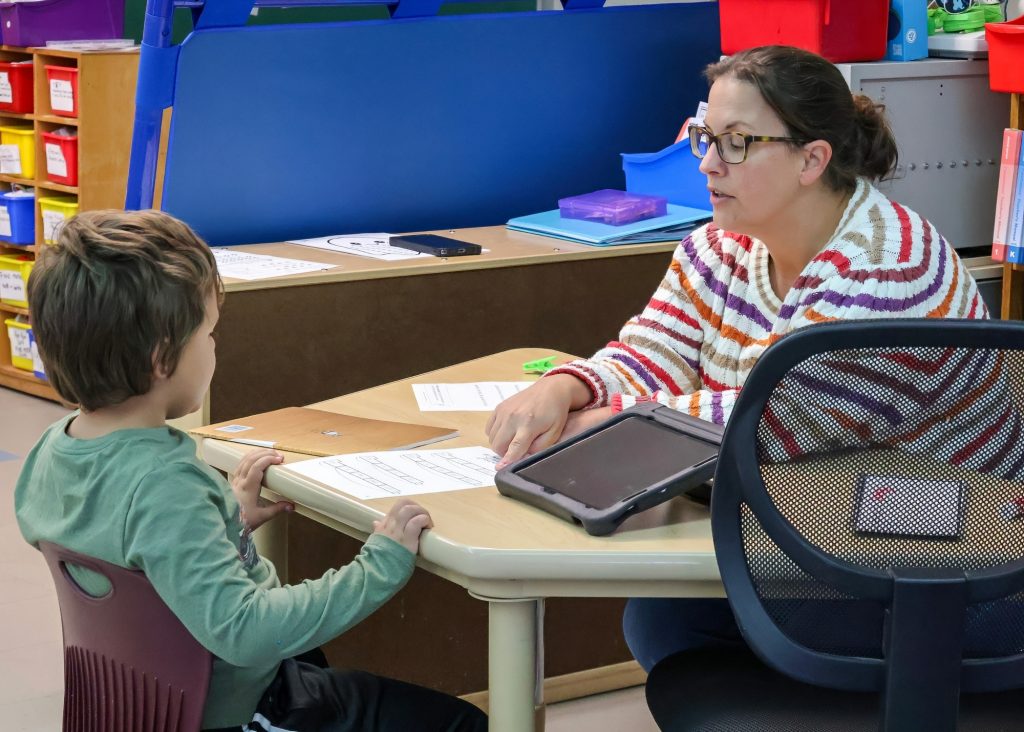
“We also have students with communication needs who use devices to express themselves. How can we support them so their needs are met?”
That commitment to individualized support is reflected in Stillwater Elementary’s four special classes, a hallmark of the district’s approach to meeting students’ diverse needs. These classes allow Yakubec and her colleagues to provide specialized services to students requiring varying levels of support while helping them remain in their home district and maintain a sense of belonging.
As Yakubec explained, “We’re able to build positive relationships with them and be inclusive, and they get to be a part of the school community with their siblings and their peers.”
Safety-Care terminology plays an important role, working hand in hand with each student’s individual crisis plan to promote consistency among staff. Regular use of the terminology in training, behavior plans and crisis responses helps staff become familiar with it and apply it effectively. This shared language helps staff stay on the same page during a crisis and provide appropriate support for students in vulnerable situations.
Listening and validation are among Yakubec’s strengths as a Safety-Care trainer at SCSD.
“Priscilla is great about validating the concerns and frustrations of a teacher,” Benamati said. “She’s great with having to figure out the different levels of needs of kids, but also understanding the human side of the teacher, hearing their struggles and validating their feelings.”
Although Safety-Care is still relatively new, its impact is already evident among students and staff. Feedback from those who have completed the training has been very positive. By spending time with Yakubec’s students and observing her use of the strategies, participants gain a clearer understanding of how Safety-Care works and greater confidence in applying those strategies with their own students.
Even staff members who have not completed the training have noticed improvements in Yakubec’s students from September to June, including smoother hallway transitions and more positive playground interactions.
“I think the key is the support that is given to staff,” Benamati said. “They see that they can learn this and have the opportunity to practice different strategies with their students. But it’s important to stress that you don’t have to be perfect.”
According to Yakubec, “It’s a lot easier to understand [Safety-Care] when you’ve seen it work.”
Interest from neighboring districts offers another indication of Safety-Care’s impact. Schools in Cambridge, Greenwich, Hoosic Valley and Hudson Falls have visited Yakubec’s classroom to see the program in action.
There is no one-size-fits-all solution or magic wand when it comes to Safety-Care. However, its versatility, ease of training and applicability to a public school setting make it a valuable resource for supporting students and staff across the district.
Future goals for Safety-Care in Stillwater include training more staff members so general education teachers can respond to crises confidently while drawing on mental health support staff when needed. By rethinking traditional responses to challenging student behaviors and using strategies tailored to individual student needs, staff can help foster a school community where prevention, understanding and student well-being come first.
Ultimately, Safety-Care comes down to one guiding principle: You’re meant to live in prevention and not reaction.